
USA-Made Peptides for Healthcare Provider Wholesale
USA-Made Peptides for Healthcare Provider Wholesale
![[HERO] USA-Made Peptides for Healthcare Provider Wholesale](https://cdn.marblism.com/S5sDafUbEhz.webp)
The landscape of regenerative medicine is undergoing a profound transformation as 2026 introduces more rigorous oversight and a renewed emphasis on domestic manufacturing standards. For healthcare providers navigating the complexities of peptide therapy, the origin of these biochemical compounds is no longer a secondary consideration but a primary pillar of clinical safety and legal compliance. As the Department of Health and Human Services (HHS) moves toward stricter reclassifications, the necessity for USA-made peptides has become the definitive benchmark for medical practices seeking to maintain the highest standards of patient care. Domestic production ensures that every stage of the synthesis process occurs under the watchful eye of stringent American quality control protocols, effectively eliminating the systemic risks associated with international logistics and opaque foreign manufacturing facilities.
Why is Domestic Manufacturing Essential for Clinical Integrity?
The fundamental argument for utilizing USA-made peptides centers on the concept of total supply chain transparency and the mitigation of environmental degradation during transit. Peptides are inherently delicate sequences of amino acids that are highly susceptible to temperature fluctuations and atmospheric exposure, both of which are common during long-haul international shipping. Specifically, when compounds are sourced from overseas, they often spend weeks in uncontrolled environments, which can lead to premature proteolytic degradation before the product ever reaches a clinical setting. By maintaining a domestic supply chain, providers ensure that the time between lyophilization and delivery is minimized, thereby preserving the structural integrity of the peptide.
Furthermore, domestic manufacturing within the United States adheres to rigorous Current Good Manufacturing Practice (cGMP) environments that are frequently audited to ensure consistency. This level of oversight provides a guarantee that the biochemical identity of the compound matches its labeling with absolute precision. For medical professionals, this translates to a level of predictability in patient outcomes that simply cannot be replicated with third-party imported materials. The stability of the domestic regulatory environment ensures that any updates to safety protocols are implemented immediately across the production line, providing a future-proof solution for clinics as the 2026 FDA reclassifications continue to take effect.

Does Full Supply Chain Control Impact Peptide Purity?
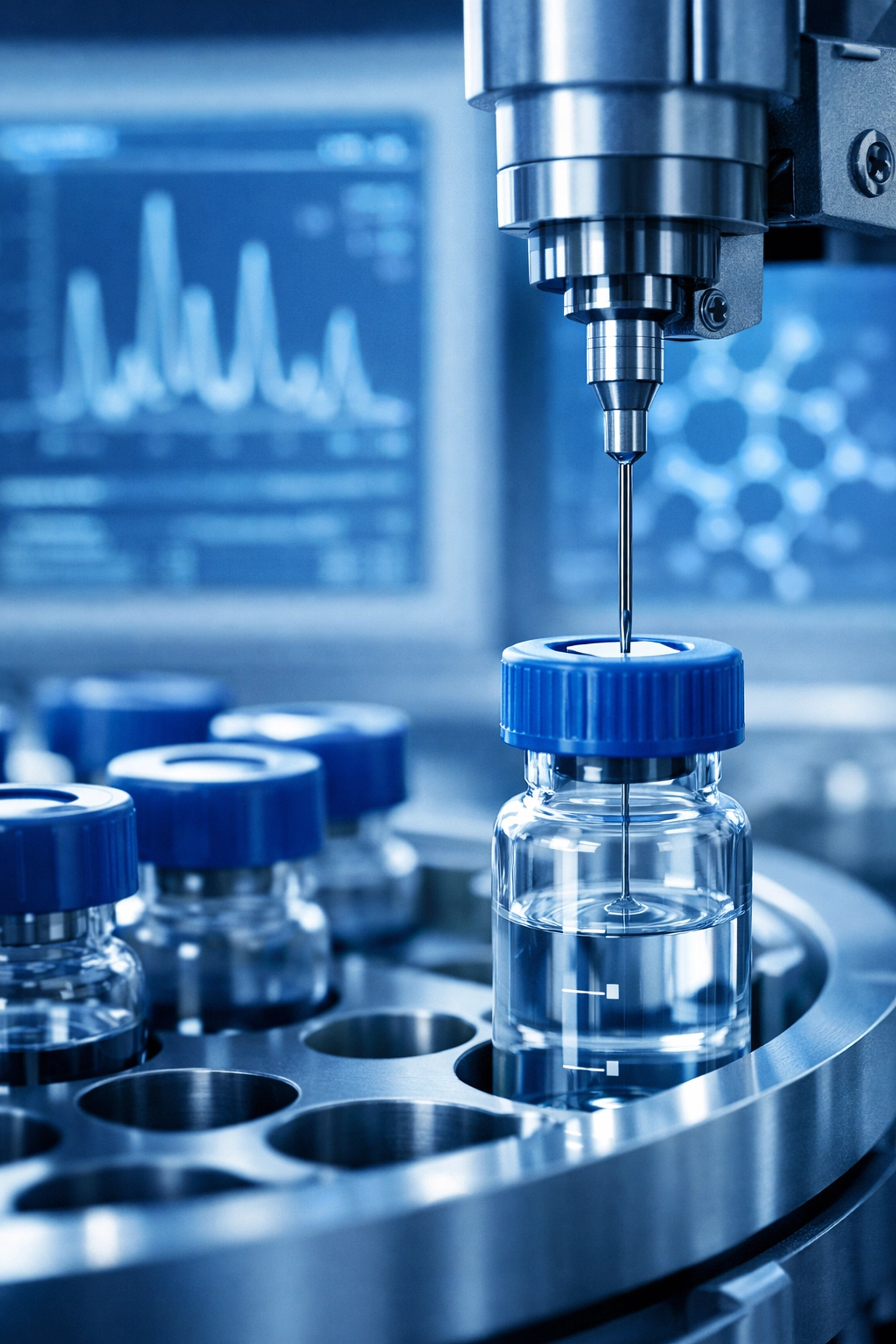
Achieving a purity level of 99% or higher is a complex biochemical feat that requires absolute control over the raw materials and the synthesis environment. When a manufacturer maintains full control over the supply chain, they are able to verify the provenance of every reagent and solvent used in the solid-phase peptide synthesis (SPPS) process. Specifically, the use of high-performance liquid chromatography (HPLC) and mass spectrometry (MS) at multiple stages of production allows for the identification and removal of any truncated sequences or residual trifluoroacetic acid (TFA). This meticulous attention to detail is what separates research-grade materials from clinical-grade solutions that meet the exacting standards of modern healthcare providers.
Additionally, the provision of comprehensive, third-party Certificates of Analysis (COAs) is a non-negotiable requirement for any legitimate wholesale partnership. These documents serve as a biochemical "fingerprint," confirming that the product contains the specified milligram content and is free from heavy metals, bacterial endotoxins, and microbial contamination. Because the manufacturing occurs domestically, these third-party labs operate under the same high standards, ensuring that the verification process is as robust as the production itself. This transparency allows providers to integrate compounds like Thymosin Alpha-1 into their protocols with the confidence that the molecular structure is exactly as intended, fostering a therapeutic environment built on empirical data and verified purity.
Why is NPI-Only Access a Safeguard for the Medical Community?
In an era where the availability of powerful biochemical tools has expanded rapidly, the implementation of NPI-only access serves as a vital gatekeeping mechanism that protects both the provider and the patient. By restricting the procurement of high-purity peptides to licensed healthcare professionals, a clear boundary is established between professional clinical application and unregulated consumer use. This validation process ensures that these potent compounds are only handled by individuals with the medical training necessary to understand their complex pharmacodynamics and potential interactions. Specifically, requiring an National Provider Identifier (NPI) during the account creation process maintains the professional integrity of the peptide industry and aligns with the 2026 directive for increased accountability in the pharmaceutical sector.
Moreover, this restricted access model facilitates a more direct relationship between the manufacturer and the clinician, allowing for specialized support and guidance on integrating these therapies into complex patient cases. When a provider utilizes a professional-grade portal, they are not merely purchasing a vial; they are gaining access to a clinical ecosystem designed to support the expansion of their practice. This professional exclusivity also mitigates the risk of illicit diversion and ensures that the therapeutic potential of compounds remains within the purview of evidence-based medicine. This structured approach is essential for the long-term viability of peptide medicine, as it demonstrates a commitment to self-regulation and professional excellence that resonates with regulatory bodies.
Can USA-Made Peptides Be Economically Advantageous for Small Clinics?
A common misconception in the pharmaceutical industry is that domestic manufacturing inevitably leads to prohibitive costs for the end-user. However, the reality of the 2026 market demonstrates that by streamlining the distribution model and removing unnecessary intermediaries, USA-made peptides can actually be more cost-effective than their imported counterparts. Specifically, many domestic wholesale providers are now offering pricing that is typically $20-30 cheaper per vial than large-scale competitors who rely on bloated marketing budgets and complex international shell companies. These savings are not achieved by compromising quality, but rather through the efficiency of a direct-to-provider model that prioritizes clinical volume over retail margins.
Additionally, the reduction in overhead costs allows medical practices to offer peptide therapies to a broader patient demographic, increasing the overall accessibility of regenerative medicine. For a small clinic, the ability to save $30 on a single vial of BPC-157 can significantly impact the bottom line, especially when scaled across multiple patients and long-term protocols. Furthermore, the absence of high minimum order quantities (MOQs) ensures that clinics can manage their inventory in a way that reflects their actual patient load, preventing the expiration of expensive stock and maximizing the return on investment. This economic agility is crucial for the survival and growth of independent medical practices in an increasingly competitive healthcare landscape.
What are the Technical Advantages of Domestic Lyophilization?
The process of lyophilization, or freeze-drying, is perhaps the most critical stage in ensuring the long-term stability of a peptide product. Domestic facilities utilize advanced industrial-grade lyophilizers that employ controlled sublimation to remove moisture while preserving the delicate secondary and tertiary structures of the peptide chains. When this process is performed in the USA, it is subject to strict atmospheric controls that prevent the introduction of ambient humidity, which is the primary catalyst for peptide degradation. Specifically, the resulting "cake" in the vial is highly stable and easily reconstituted, ensuring that the patient receives a potent and effective dose every time.
Furthermore, the proximity of the manufacturing facility to the clinical provider means that the time spent in the "lyophilized state" before usage is optimized. While lyophilized peptides are stable, they are not immortal; therefore, a fresher product naturally possesses a superior kinetic profile. Transitioning to a domestic wholesaler allows providers to receive batches that have been synthesized and processed within weeks, rather than months. This technical superiority is particularly relevant when dealing with complex blends or high-concentration vials, where the precision of the lyophilization cycle determines the ease of reconstitution and the final clarity of the solution.

How Does Domestic Sourcing Facilitate Future Practice Expansion?
As medical science moves toward more personalized and preventative models, the role of peptides in longevity and metabolic health will only continue to expand. By establishing a partnership with a domestic, NPI-validated wholesaler today, healthcare providers are positioning their practices at the forefront of this medical revolution. The ability to source high-purity compounds such as 5-Amino-1MQ or advanced metabolic regulators ensures that a clinic can pivot quickly as new research emerges. Moreover, the reliability of a USA-based supply chain allows for more aggressive growth strategies, as providers can be certain that their inventory will arrive on time and meet the required specifications for every patient.
In conclusion, the decision to source USA-made peptides is a multifaceted choice that impacts clinical safety, regulatory compliance, and economic viability. By prioritizing 99%+ purity, third-party verification, and NPI-exclusive access, healthcare providers are doing more than just purchasing a product; they are upholding the highest traditions of the medical profession. The future of peptide therapy is inherently domestic, driven by a commitment to excellence that begins in the lab and ends with transformative patient outcomes. As the industry moves forward into 2026 and beyond, the practices that embrace these standards will lead the way in redefining the boundaries of modern medicine, offering hope and healing through the power of precision biochemistry.